
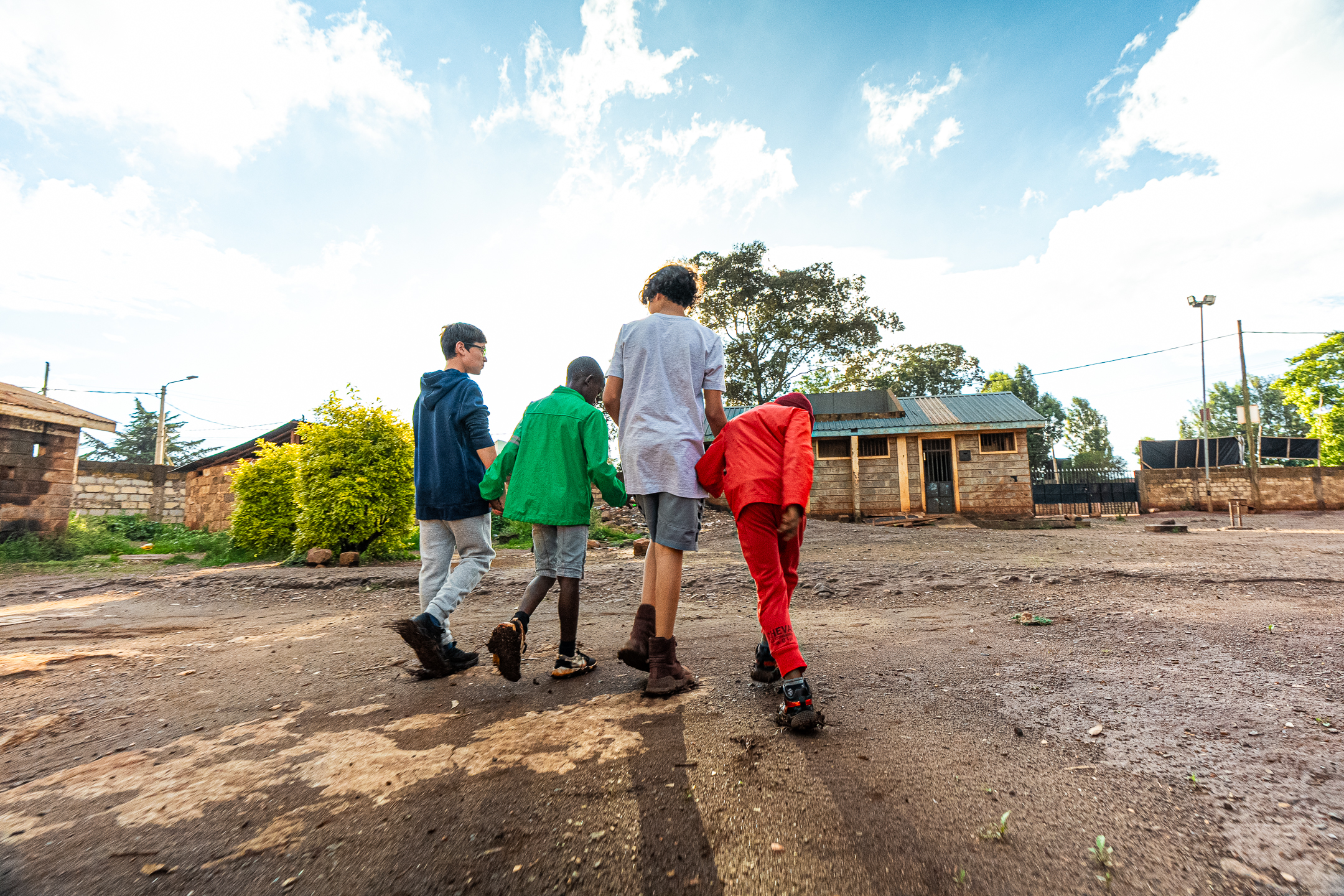

Lucas, a student who struggled with attention issues and anxiety in traditional classroom settings, had transformed during our seven days in Kenya. He was sleeping better, participating actively in group activities, and demonstrating focus that had eluded him all term. His teacher remarked on how relaxed and engaged he appeared as he introduced himself to his Kenyan counterparts on the last day of the trip.
This scenario has repeated itself countless times in my work coordinating educational trips. While we often focus on environmental learning or adventure activities, the mental health benefits of nature-based educational experiences may be their most valuable and underappreciated outcome.
The Science Behind Nature's Mental Health Benefits
The research supporting this observation is substantial. Studies show that nature experiences can reduce cortisol levels by 21% per hour, with the most efficient benefits occurring when nature exposure lasts between 20 and 30 minutes. Meta-analysis results have shown that increased natural exposure is associated with decreased salivary cortisol, reduced anxiety, and lower blood pressure.
Additional research demonstrates that nature-based experiences enhance concentration abilities and promote learning. Natural settings may affect learning both by directly fostering a learner's capacity to learn and by providing a more supportive context for learning.
Recent studies on residential outdoor trips have shown that children gain greater self-esteem, an increased sense of empowerment, greater self-efficacy and more confidence in trying new activities and socialising through hands-on nature-based experiences.
The Urgent Need for Mental Health Support
These benefits are particularly relevant today, as youth mental health challenges reach alarming levels. According to the World Health Organisation, globally, one in seven 10-19-year-olds experiences a mental disorder, accounting for 15% of the global burden of disease in this age group. In the United States, more than 5.3 million adolescents ages 12-17 years (20.3% of adolescents) had a current, diagnosed mental or behavioural health condition in 2023, with anxiety being the most common condition at 16.1%.
How Nature-Based Educational Trips Support Mental Health
Educational trips centred around natural environments provide multiple mental health supports simultaneously:
Digital Detox and Attention Restoration: They remove students from digital oversaturation and constant connectivity that contribute to attention fragmentation and social comparison. This break from screens allows for natural attention restoration that research shows is crucial for cognitive function.
Circadian Rhythm Reset: Natural light exposure and physical activity help improve sleep patterns that are fundamental to mental wellbeing. Many students report better sleep quality during and after nature-based trips.
Mindfulness and Sensory Engagement: Nature environments naturally promote mindful awareness as students observe wildlife, navigate trails, or simply experience natural beauty. This sensory engagement provides a calming counterbalance to the overstimulation many young people experience daily.
Authentic Social Connection: These experiences foster genuine social connection through shared experiences and collaborative activities without the mediation of screens. Students often form stronger relationships and develop better communication skills in these settings.
Physical Activity Benefits: The natural physical activity involved in outdoor education releases endorphins and provides the exercise that research consistently links to improved mental health outcomes.
Classroom and School-Wide Benefits
Schools implementing regular nature-based trips report measurable improvements in student behaviour and engagement. Teachers note decreased behavioural issues, improved attendance, and stronger classroom community upon return from outdoor experiences. Students who struggle in conventional academic settings often discover strengths and confidence in outdoor contexts, creating positive identity shifts that transfer back to the classroom.
These benefits extend beyond individual students to create more positive school cultures overall. When students return from nature-based experiences with improved self-regulation and social skills, the entire learning environment benefits.
Accessibility and Implementation
Importantly, these benefits don't require exotic destinations or expensive programming. Research indicates that even short-term visits to nearby nature such as urban parks relieves stress. Local nature reserves, state parks, or even urban green spaces can provide similar advantages when trips are thoughtfully structured to include:
- Quiet reflection time away from stimulation
- Physical activity appropriate to students' abilities
- Sensory awareness activities that promote mindfulness
- Natural history learning that connects students to their environment
- Opportunities for collaborative problem-solving in outdoor contexts
Educational Priorities and Policy Implications
The implications are significant for educational priorities. If nature-based experiences demonstrably support student mental health and cognitive function, they should be considered essential rather than supplementary components of education. The Canadian Psychological Association notes that two hours per week of nature exposure has been linked to better health and well-being, with 20 minutes at a time being ideal for reducing stress hormones.
This research suggests that schools should systematically integrate nature-based learning opportunities rather than treating them as occasional field trips or rewards. The mental health crisis among young people demands that we utilise every evidence-based intervention available, and nature-based education represents a powerful, accessible tool.
Moving Forward
What opportunities might exist for your school to integrate more nature-based educational trips? The evidence clearly shows that these experiences support holistic student wellbeing while simultaneously advancing academic and environmental education goals.
Schools can start small by incorporating regular visits to local green spaces, developing partnerships with nearby nature centres, or redesigning existing field trips to include more intentional nature-based mental health components. The key is moving beyond viewing outdoor education as an add-on to recognizing it as a fundamental component of supporting student mental health and learning.
In a time when adolescent mental health challenges are at unprecedented levels, nature-based educational experiences offer a research-backed intervention that schools can implement regardless of budget constraints. The question isn't whether we can afford to provide these experiences, but whether we can afford not to.